
Pheasants International provides equipment performance testing services in Pakistan for chillers, air handling units, pumps, cooling towers and boilers.
Nameplate data tells you what a machine was sold as. Field testing tells you what it is doing now — on your water, at your load, in Pakistani ambient conditions, after however many years of service.
That gap matters here more than in most markets. Ambient temperatures above 45°C force compressors to work harder and cut available capacity. Dust loads coils and filters faster than design assumptions allow. Grid voltage fluctuation affects motor speed and current draw. A machine rated at European test conditions will not deliver those numbers in Lahore in June.
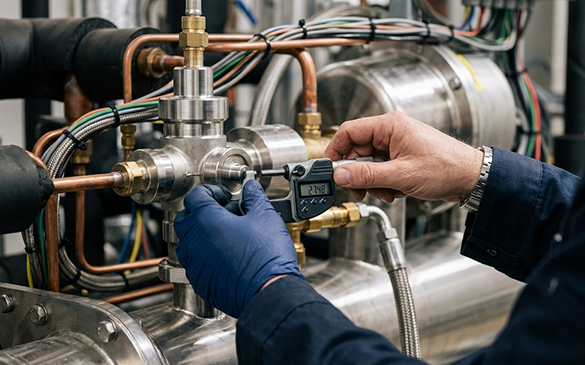
Nameplate data, design duty, manufacturer curves, commissioning records
Calibrated measurement installed at the correct points for each machine
Measured under real operating conditions, not artificial ones
Efficiency, capacity, approach temperatures, combustion efficiency
Measured performance against rated duty at the same operating point
Findings with likely cause of any shortfall and recommended action
Commercial towers and offices
Hospitals
Hotels
Shopping malls
Pharmaceutical plants
Textile and manufacturing facilities
Data centers
Food and beverage processing
District cooling schemes
ISO 14644-1
ISO 14644-3
EU GMP Annex 1
IEST recommended practice
Equipment performance testing measures the actual delivered output and efficiency of installed HVAC plant under real operating conditions and compares it against design duty, manufacturer curves and warranty conditions.
Pheasants International provides field performance testing of chillers, AHUs, pumps, cooling towers and boilers across Pakistan, measuring kW/TR, approach temperatures and combustion efficiency against rated duty.
kW/TR expresses chiller electrical input per ton of refrigeration delivered, and lower is more efficient. The meaningful comparison is against your machine’s own rated performance at the same conditions, not a generic benchmark.
High ambient temperature raises condensing pressure and reduces available capacity, and dust-fouled condenser coils compound the effect. Testing separates ambient-driven capacity loss from genuine mechanical faults.
By combustion analysis. Flue gas oxygen, carbon monoxide, carbon dioxide and stack temperature are measured to calculate excess air and combustion efficiency, with the burner tested across its firing range.