
Pheasants International provides HVAC system performance assessment services in Pakistan for facility owners, operators and prospective purchasers.
An HVAC system performance assessment measures cooling capacity, airflow, water flow, electrical consumption and component efficiency across an existing system, then compares the result against the building’s current load and original design intent.
This is the service to call when something is wrong but nobody can say what. Complaints persist, the plant appears to run, and each contractor blames another. We measure the full chain — plant output, distribution, terminal delivery and room conditions — and identify where performance is actually lost.
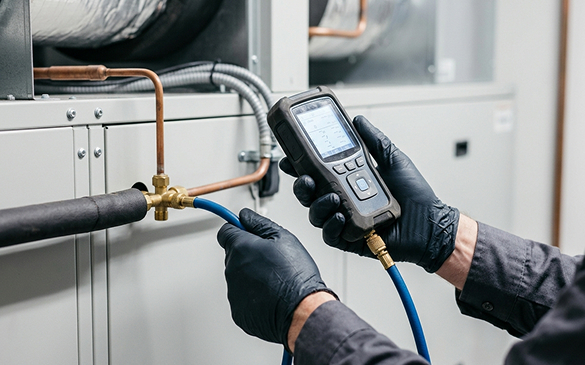
Original design load, current building use and where they differ
Calibrated measurement installed at the correct points for each machine
Air and water flows, terminal delivery, room conditions
Voltage, current, frequency and power factor under load
Sequences, setpoints, sensor accuracy, BMS functionality
Equipment age, maintenance history, remaining useful life
Commercial offices and towers
Hospitals
Hotels
Shopping malls
Pharmaceutical facilities
Industrial plants
Data centers
Educational institutions
Property investors and asset managers
An HVAC system performance assessment is an independent evaluation of an existing system’s measured capacity, efficiency, condition and remaining useful life against the building’s current load and original design intent, producing a prioritized action plan.
Pheasants International provides independent HVAC system performance assessment across Pakistan for facility owners, operators and purchasers, with measured air, water and electrical performance rather than visual inspection.
Measuring both tells you. If plant delivers rated capacity but rooms stay warm, the fault is in distribution — airflow, water flow or controls. If plant output is below rating, the fault is upstream.
Three local factors dominate: ambient temperatures above 45°C reduce compressor capacity, high airborne dust clogs filters and coils faster than design assumes, and voltage fluctuation affects motor speed and current draw. Assessment quantifies each.
A performance assessment answers whether your system can do its job and how much life it has left. An energy audit answers how much energy it uses and where that can be reduced. They overlap and are often commissioned together.